

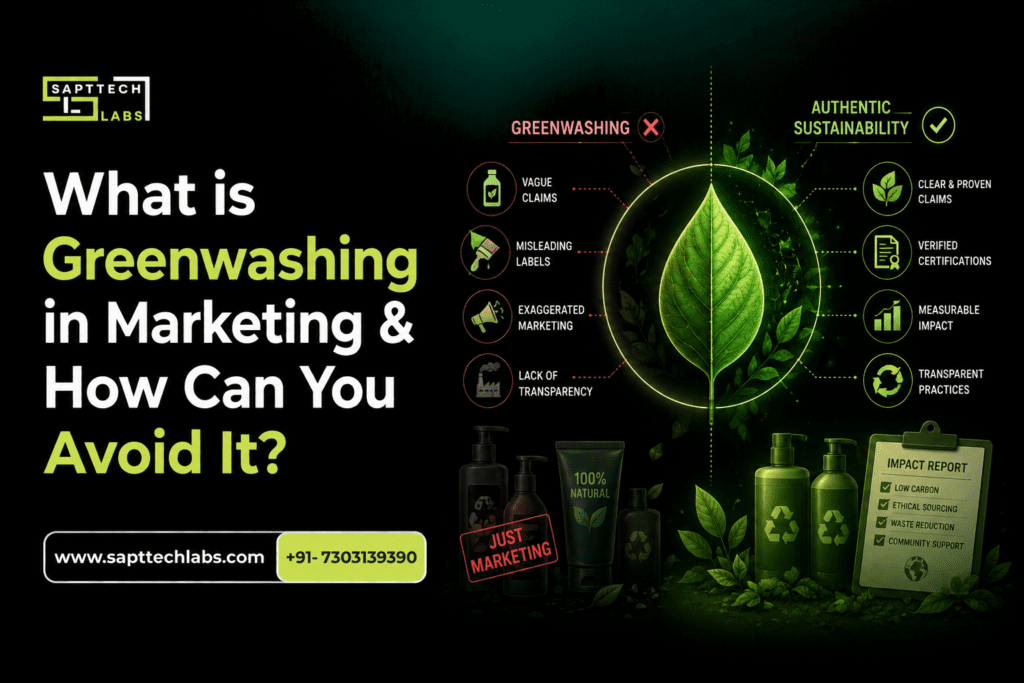
What is Greenwashing in Marketing & How Can You Avoid It?
Nowadays, customers are more environmentally aware than ever before. People want their brands to be environmentally supportive, less polluting, and practicing green activities. With the rise in awareness among people, there is an increasing number of companies claiming themselves to be eco-friendly. But not all firms are sincere with these claims. Here comes the concept of greenwashing.
What is Greenwashing?
Greenwashing is a kind of marketing technique where the firm misleads the public regarding its brand, products, or services by claiming the same as environmentally sustainable. Simply put, firms indulge in deceptive environmental claims without implementing green strategies.
The term greenwashing is derived from the two words: “green” and “whitewashing.” The practice of greenwashing aims at developing good corporate image and gaining customers’ trust.
For instance, firms indulge in using green colors in their packaging along with nature-related symbols or words like natural or eco-safe despite being damaging to the environment.
Why is Greenwashing a Problem?
There is no doubt that greenwashing could lead to a lack of trust and confusion in the marketplace. Customers are unaware of supporting companies which are falsely sustainable. At the same time, there are many enterprises which are spending much on sustainability.
Major issues which greenwashing causes:
- Cheating consumers
- Harming company reputation
- Eroding trust in sustainable marketing
- Fostering dishonest business tactics
- Hindering environmental progress
In the current age, customers usually conduct their research before purchasing goods.
Common Examples of Greenwashing
Recognizing some of the typical techniques used for greenwashing will allow customers as well as companies to avoid misleading marketing claims.
- Vague Claims
Using vague terms such as “green”, “natural”, or “eco-friendly” without providing any substantiation.
- Deceptive Packaging
Using colors or pictures related to nature to falsely suggest that their products are environmentally friendly.
- Hidden Trade-Offs
Promoting certain eco-friendly qualities but neglecting overall environmental damage associated with production.
- Fake Certifications
Displaying fake eco-certification and labeling that is not certified.
- Excessive Claims of Sustainability
Making claims such as being “100% sustainable.”
How Can Businesses Avoid Greenwashing?
Ethical marketing is the right way to foster trust and increase sustainability efforts in businesses that truly care about their sustainability initiatives and trust. Here are some strategies to prevent greenwashing:
Be honest and transparent.
Only use language for making claims that is substantiated. Provide correct information regarding materials, manufacturing and sustainability initiatives.
Use Real Certifications
Get certification from reputable environmental groups. Labels with verification enhance consumer trust and confidence.
Provide Proof
Back up claims with data, reports or measurable outcomes. Transparency and fact-based information is valued by customers.
Think long-term sustainability.Think long term sustainability.
Rather than use the word ‘sustainability’ only as a marketing buzzword, businesses must make real changes in their operations and supply chains to be truly sustainable.
Avoid Misleading Language
Avoid using the phraseology that is too general or hyperbole. To inform customers about the sustainability of a product, it is important to communicate clearly.
How Can Consumers Identify Greenwashing?
Carefully conduct research on companies before buying products claiming to be sustainable. Below are a couple of tips to help in the process:
- Search for certifications
- Check the ingredients/materials used in making the product
- Look at the sustainability report of the brand
- Learn about the company’s sustainability policy
- Do not choose brands claiming too much from their products
A legitimate sustainable brand always provides thorough information rather than only using marketing language.
Conclusion
Greenwashing is a rising issue as more trends become popular. Although there is nothing wrong with promoting environmentally friendly products, misleading consumers by using fake environmentalism branding is detrimental. Therefore, businesses should consider implementing sustainable practices.
As a consumer, one should know what greenwashing entails to make informed decisions and support companies committed to protecting the environment. In essence, companies should