

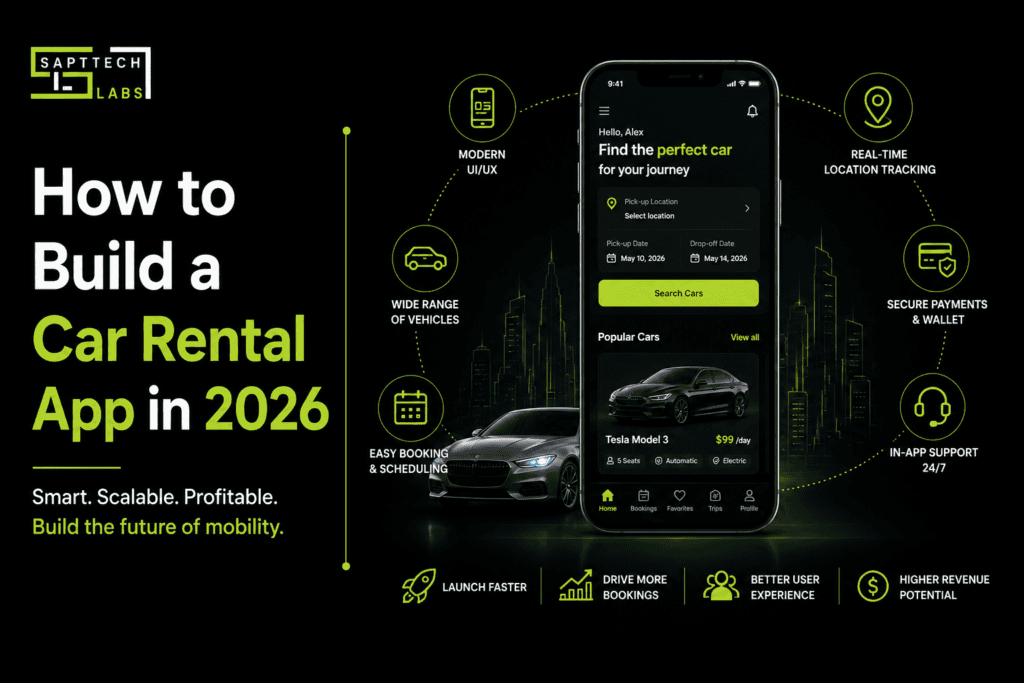
How to Build a Car Rental App in 2026
Okay, so here's the thing about renting a car these days which nobody wants to do it the old way anymore. Standing in line, calling around, filling out paperwork by hand? That's basically dead. People want to pull out their phone, scroll through a few cars, pick one, pay, and go. That's it. That's the whole expectation now.
And because of that shift, 2026 has turned into a genuinely good time to build a car rental app. Whether you're already running a rental business, or you're a founder eyeing the mobility space for the first time, there's real money to be made here, if you build the thing right. So let's walk through what "right" actually looks like: the features, the tech, the cost, the timeline, all of it.
What Is a Car Rental App?
Pretty simple, really. It's an app where someone can search for a car, compare a few options, upload their license, pay securely, and sometimes even unlock the car with their phone — no office visit needed. Think Turo, Hertz, Zoomcar, Getaround, Sixt. You've probably used one of these without even thinking about how much is happening behind the scenes.
Why Bother in 2026?
A few things are pushing this trend forward. More people have smartphones than ever, obviously. Travel — both leisure and business — keeps climbing back. Cities are leaning harder into mobility-as-a-service instead of car ownership. And there's a real appetite now for electric vehicle rentals and contactless pickup, especially post-pandemic habits that just... stuck around.
Companies that get this right see it pay off too — better retention, smoother fleet operations, less friction across the board.
Book A Free Consultation!
First, Pick Your Business Model
Before you write a single line of code, you need to know what kind of app you're actually building. There are a few flavors:
Traditional rental — you own the fleet, customers rent from you directly (think Hertz, Avis, Enterprise).
Peer-to-peer — regular people list their own cars (Turo, Getaround territory).
Chauffeur booking — customer gets a car and a driver, common for airport transfers or luxury service.
Corporate fleet — built specifically for companies managing transportation for their own employees.
Each one changes your feature list, your legal considerations, even your monetization. So don't skip this step.
The Features Users Actually Need
I'll break this into chunks because there's a lot here, but none of it is optional if you want a serious app.
Getting people signed up — email, phone, Google, Apple, Facebook. Give people options, because everyone has a preferred login method and forcing one just loses you signups.
The user profile — this is where people upload their license, verify who they are, save a payment method, and look back at past bookings. It's the command center for the whole rental relationship.
Smart search — and I mean smart. Filters for vehicle type, brand, price, fuel type, EV or not, transmission, seating, pickup location, availability. People know exactly what they want, so let them filter down to it fast.
Real-time availability — nobody should book a car that's actually already gone. Feels obvious, but it trips up a lot of apps.
Detailed vehicle listings — photos, specs, fuel policy, mileage limits, insurance info, reviews from past renters. The more transparent you are here, the fewer support tickets you'll get later.
GPS everything — locating nearby cars, navigating to pickup, tracking the booking in real time. Honestly, Google Maps integration isn't really optional anymore. It's expected.
Booking flow — pick your dates, pick your location, pick your car, done. Keep it to as few taps as humanly possible.
Payments — cards, UPI, Apple Pay, Google Pay, PayPal, digital wallets. Cover as many bases as your market needs.
Digital KYC — license verification, government ID, face verification. This protects you as much as it protects the customer.
Push notifications — booking confirmed, payment went through, time to pick up the car, time to return it, oh and here's a deal you might like.
Reviews — for the car, sometimes for the owner or driver, sometimes for the whole experience. Trust is everything in this business.
Support — live chat, phone, email, FAQ. People renting cars are often traveling, stressed, or in a hurry, so support needs to actually work.
Rebooking made easy — if someone loved their last rental, let them book it again in two taps.
In-app navigation — getting to pickup, finding parking, returning the car. Small thing, huge quality-of-life boost.
Now, the Fleet Owner Side
If you're running any kind of marketplace model, owners need their own dashboard — managing their vehicles, tracking bookings, watching earnings roll in, setting availability, scheduling maintenance, managing drivers if that applies, and pulling reports to see how they're actually doing.
And the Admin Panel
Somebody's got to run the whole show. Admins need control over users, the fleet, vendors, pricing, promotions, payments, reviews, reports, support tickets, and document verification. This is the unglamorous but absolutely essential backend of the whole operation.
Features That'll Set You Apart
If you want to go beyond "functional" and into "genuinely impressive," here's where the interesting stuff lives:
AI recommendations that learn what a user tends to book. Dynamic pricing that shifts with demand, the way surge pricing works for rideshares. Contactless pickup where you literally unlock the car from your phone. IoT sensors tracking fuel, speed, location, and engine health in real time. An AI chatbot for instant support. Voice search for people who'd rather talk than type. And an EV charging station locator, which is becoming close to mandatory if electric rentals are part of your fleet.
What's Under the Hood (Tech Stack)
For the actual build, here's roughly what teams are reaching for right now:
Mobile: Flutter or React Native for cross-platform, or Kotlin and Swift if you're going native. Backend: Node.js, Django, Laravel, or Spring Boot. Database: PostgreSQL, MongoDB, or MySQL. Cloud: AWS, Azure, or Google Cloud. APIs: Google Maps, Stripe or Razorpay for payments, Firebase, Twilio for messaging.
None of these are "wrong" choices exactly — it really comes down to your team's expertise and what scale you're planning for.
How the Build Actually Unfolds
Step one is market research — really dig into what Zoomcar, Turo, and Hertz are doing, and find the gap they're leaving open.
Step two, define your MVP. Registration, search, booking, payments. Nothing fancier yet.
Step three, UI/UX — keep the booking flow dead simple, navigation intuitive, checkout fast.
Step four, backend — APIs, authentication, fleet management, the admin dashboard.
Step five, build the actual apps for Android and iOS.
Step six, test everything — functionality, security, performance, different devices, and definitely the payment flow (this is where things quietly break).
Step seven, launch on the Play Store and App Store.
Step eight, and this one people forget — maintain it. Bug fixes, new features, security patches. The work doesn't stop at launch, honestly it kind of just starts there.
So... What's This Going to Cost?
Depends a lot on complexity, platform, and where your dev team is based. Roughly:
- MVP: $15,000–$30,000
- Medium complexity: $30,000–$60,000
- Advanced platform: $60,000–$150,000+
What pushes the number up? UI/UX polish, backend complexity, AI features, IoT, payment integrations, and how elaborate your admin dashboard needs to be.
And Timeline-Wise?
An MVP usually takes 2–4 months. A medium-complexity app runs 4–6 months. Full enterprise platforms can take 6–12 months. Plan accordingly — rushing this stuff tends to cost more later than it saves now.
How Do You Actually Make Money?
Rental commissions are the obvious one, but there's more on the table: subscription plans, premium memberships, featured listings for vendors who want visibility, insurance partnerships, in-app ads, delivery fees, late-return penalties, and corporate contracts if you're serving businesses directly.
The Stuff That'll Trip You Up
Every rental business runs into some version of: verifying drivers properly, catching fraud before it costs you, keeping vehicles maintained, staying insurance-compliant, getting GPS accuracy right, pricing dynamically without annoying customers, handling traffic spikes, and dealing with the occasional failed payment. Plan for these early — genuinely, it saves you a lot of pain down the line.
Don't Skimp on Security
This part isn't negotiable. Two-factor authentication, SSL encryption, secure payment gateways, token-based auth, role-based access control, GDPR (and whatever local privacy laws apply), regular security audits, and encrypted document storage. Cutting corners here isn't worth it as one breach and you lose trust you'll never fully get back.
Where This Is All Heading
Looking ahead, a few trends keep showing up: AI-driven pricing and recommendations, EV rentals becoming the norm rather than the exception, autonomous vehicles slowly entering the picture, blockchain for identity verification, subscription-based mobility instead of one-off rentals, voice booking, predictive maintenance, connected IoT vehicles, contactless everything, and a real push toward sustainability. Businesses that start adapting now will have a real head start later.
Wrapping This Up
Building a car rental app that actually works in 2026 takes more than a decent booking screen. People expect the whole experience of finding the car, verifying who they are, paying, managing the rental to be fast and secure without any friction. Get the features right, pick a tech stack that fits your scale, take security seriously, and build with growth in mind from day one.
Whether you're starting small with an MVP or going all-in on an enterprise platform, the businesses that win here are the ones that never stop thinking about the user experience. Do that well, and this app isn't just a product — it becomes a genuine asset for the business, quietly working for you long after launch.