
The Ultimate Guide to Choosing a React Native Development Company
Picking a React Native development company isn't just another line item on your project checklist, but instead it's a decision that'll shape how your app performs, whether it scales when you actually need it to and how much of a headache maintenance becomes down the line. React Native itself is a solid choice for cross-platform development. But the framework only gets you halfway there. The team you hire to build it determines whether the final product actually works the way you imagined.
There are hundreds of agencies out there claiming they're React Native experts. Sorting the real ones from the ones just riding the trend takes a bit of digging, like technical expertise, portfolio quality, pricing structure, how they communicate, what happens after launch. This guide walks through what actually matters.
What Is React Native, Anyway?
For anyone who needs the quick version: React Native is an open-source framework for building apps that run on both Android and iOS, using a single shared codebase for most of the app while still tapping into native functionality where it's needed.
The framework has come a long way. Its newer architecture has changed how JavaScript talks to native components, and if you look at React Native's own documentation, you'll see real improvements in rendering performance and how native modules behave.
But here's the thing, none of that matters if the team building your app doesn't know what they're doing. You need people who understand not just React Native, but native mobile development, APIs, testing, security, and the whole deployment process. Otherwise you're just hoping for the best.
Book A Free Consultation!
Why the Right Company Actually Matters
Think about everything that goes into an app: architecture, UI/UX, performance, security, testing, third-party integrations, getting it approved and live in the app stores, and then keeping it running smoothly as your user base grows. Your development partner touches all of it.
Hire the wrong team and you might end up with something that technically works on day one but turns into a maintenance nightmare six months later. Hire the right one, and you've got a partner who catches problems before they become expensive ones.
8 Things to Look at Before You Sign Anything
- Actual React Native expertise — not just familiarity
Don't take "yes, we use React Native" at face value. Ask how many projects they've actually shipped with it, and push for specifics on what technical problems they ran into and how they solved them. Look at their portfolio for real React Native work, ask about their Android and iOS work, and see if they can speak intelligently about API integration and the current state of the framework.
Here's a good litmus test: can they explain their architectural decisions in plain, practical terms? Or do they just give you the marketing brochure answer? The second one's a red flag.
- Dig into the portfolio — really dig
A slick looking screenshot doesn't tell you much. What you want to know is what role the company actually played. Did they build the app from the ground up? What tech stack did they use? Did they handle the backend too, or just the front end? Who managed testing and deployment? Is the app still being maintained, or did they disappear after launch?
If you can find a project similar to what you're building, even better. A fintech app and an on-demand delivery app need very different kinds of expertise, so match the experience to your actual use case.
- Native Android and iOS knowledge still matters
React Native is cross-platform, sure, but a good team still needs real native development knowledge. This becomes obvious the moment you need something like Bluetooth, GPS, camera access, push notifications, payments, or any kind of advanced animation. Ask how they handle platform specific quirks before you sign anything as this is usually where inexperienced teams start to stumble.
- Understand their technical approach
React Native keeps evolving, so ask which version they're planning to use and whether they're building on the New Architecture. How do they pick third-party libraries? What's their plan for handling upgrades down the road? How will the app hold up as your user base grows? These aren't gotcha questions, but a competent team should have clear, confident answers.
- Ask about testing and QA
Testing shouldn't be something that happens the week before launch. It should be baked into the process from day one. Ask whether they do functional testing, device testing across different Android and iOS versions, regression testing, performance testing, security testing, and automated testing. Apple's own App Review Guidelines get picky about functionality, reliability, and user experience so if your QA process is weak, you're setting yourself up for rejection or a bad launch.
- Don't skip the security conversation
Security can't be an afterthought, but it needs to be built in from the start. Ask how they handle authentication, authorization, API security, encryption, secure data storage, and privacy compliance. Also worth asking: how do they vet third-party dependencies? A team that gets vague or defensive here is one to be wary of.
- Compare pricing, but don't chase the cheapest quote
The lowest bid is rarely the best deal and it's usually a sign that something's getting cut, whether that's testing, security, or ongoing support. Development cost depends on a lot of moving parts: app complexity, feature count, UI/UX work, backend needs, integrations, testing, and timeline.
Get a proposal that actually spells out what's included. And make sure you're clear on payment milestones, project scope, what happens if you request changes mid-project, who owns the source code, and what maintenance will cost once you're live.
- What happens after launch?
Launch day isn't the finish line. You'll need bug fixes, performance tuning, security patches, React Native version upgrades, and probably new features as your business grows. Ask what their support process actually looks like once the app is live. A company willing to stick around becomes a long-term partner and not just a vendor you hire once and never talk to again.
Questions Worth Asking Before You Commit
- How many React Native apps have you actually built?
- Can I see relevant case studies and not just any portfolio piece?
- Who specifically will be working on my project?
- What's your native Android and iOS experience like?
- How do you approach architecture decisions?
- Walk me through your testing process.
- How do you handle security?
- What exactly is included in this quote?
- Who owns the source code once the project's done?
- What does post-launch support look like?
Honestly, how a company answers these questions tells you more than their entire website ever could.
Red Flags Worth Taking Seriously
Be careful if a company:
- Quotes a price that seems too good to be true (it usually is)
- Promises a fixed timeline before they've even scoped your requirements
- Can't point to real React Native experience
- Has no real QA process to speak of
- Gets cagey when you bring up security
- Sticks with outdated tools without a good reason
- Won't put things in writing with a clear contract
- Offers zero post-launch support
A company that's confident in its work won't dodge these conversations. If anything, they'll be the ones bringing them up first.
The Short Version
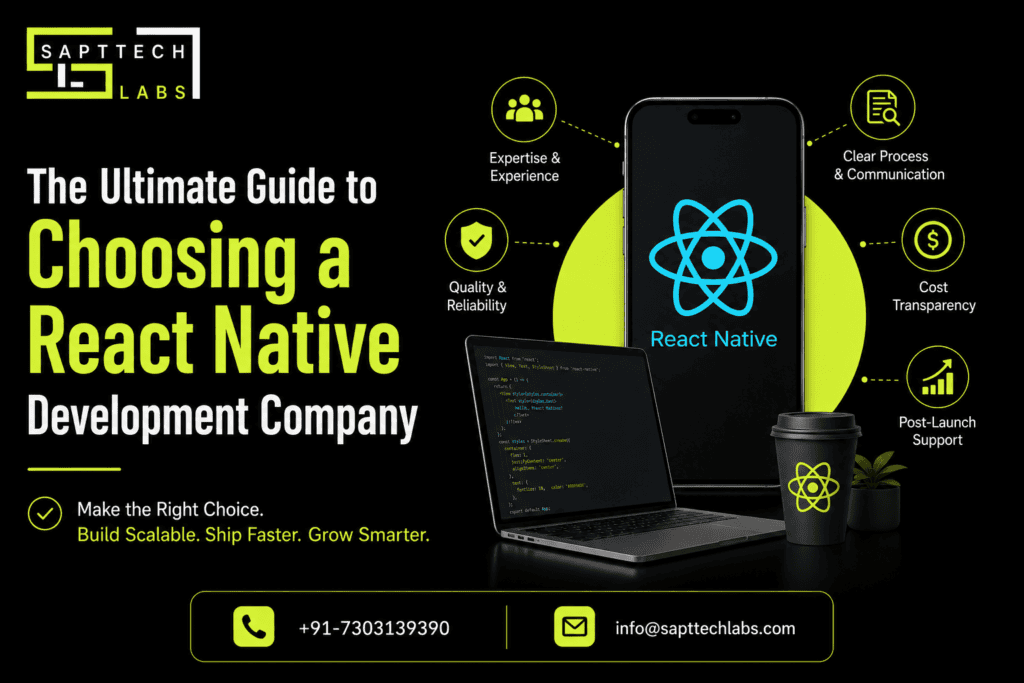
Before you sign with anyone, weigh these five things:
- Technical expertise — do they genuinely understand React Native and native development, or just the buzzwords?
- Portfolio — have they built something comparable to what you need?
- Quality — is their testing, security, and performance process actually solid?
- Communication — is their project management transparent, or are you going to be chasing updates?
- Long-term support — will they still be around when you need them six months from now?
Wrapping Up
Choosing a React Native development company comes down to more than finding people who can write good code and plenty of teams can do that. What you actually need is a partner who understands your business, your users, and where you want to be a year or two from now.
Weigh experience, portfolio, technical depth, pricing transparency, communication, and post-launch support together, not just the price alone. Get that right, and you end up with a partner who can turn your idea into something secure, scalable, and built to grow with you.